- Artist and The Machine 👾
- Posts
- Disney, OpenAI, and the Return of Storytelling
Disney, OpenAI, and the Return of Storytelling
TL;DR: Strong narratives determine what people care about. AI expands how those narratives take shape and circulate.
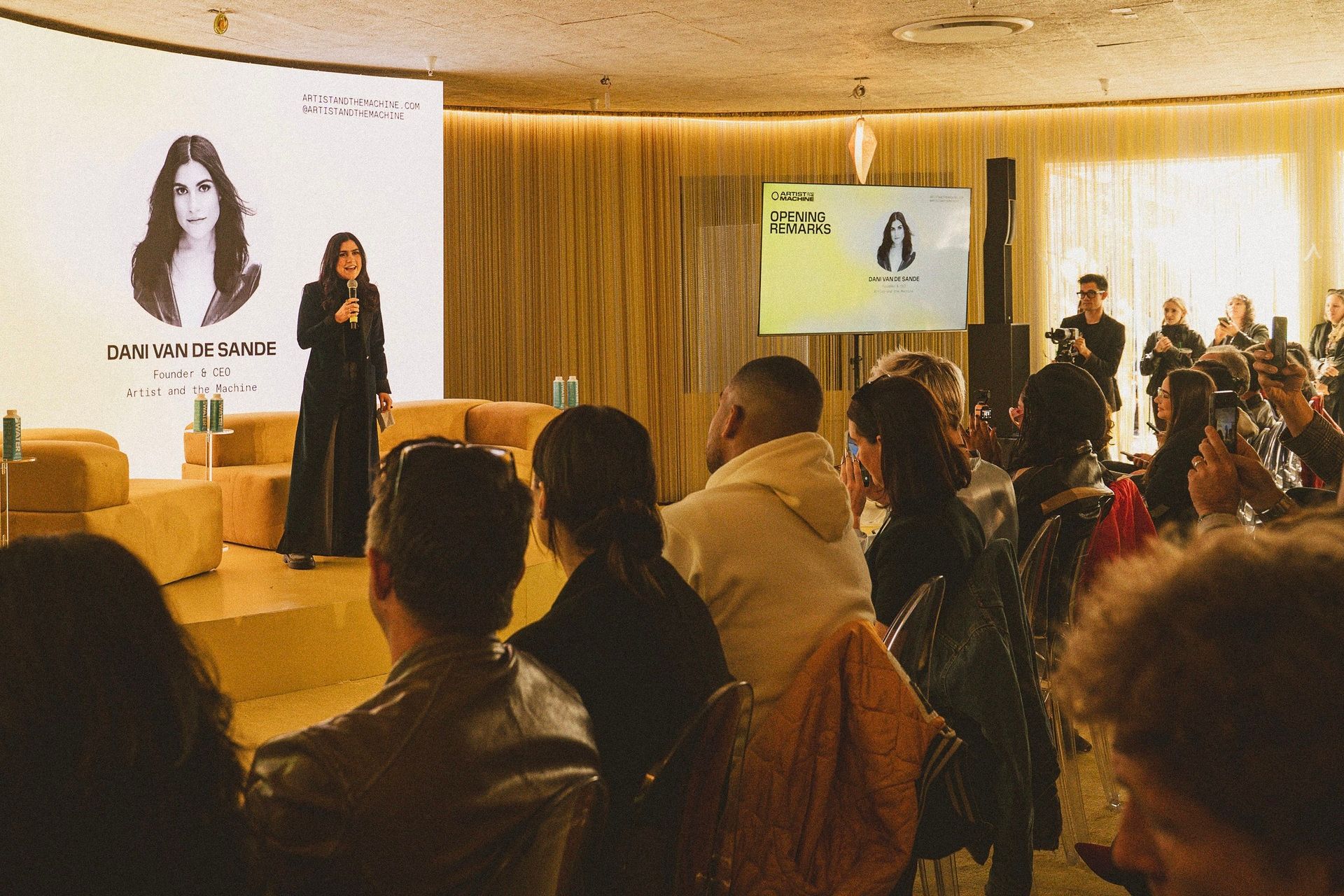
LA Summit
Last week delivered two headlines that, taken together, say something important about where AI and creativity are headed. The first was a landmark partnership between Disney and OpenAI. The second was a Wall Street Journal piece on why companies are suddenly racing to hire storytellers. On the surface, they seem unrelated. In practice, they’re deeply connected.
A New Kind of Licensing Deal
Disney’s licensing agreement with OpenAI is one of the first landmark deals between a legacy entertainment company and leading AI project. Hundreds of characters across Disney, Pixar, Marvel, and Star Wars will be available inside OpenAI’s tools, giving fans and creators new ways to create, remix, engage with familiar IP.
Disney’s move feels like a frontier test for generative AI inside legacy entertainment. Fans can prompt tools like Sora to create new expressions of familiar characters within environments that keep rights intact. For Disney, this opens a controlled sandbox for experimentation, new forms of engagement, and distribution, allowing the company to benefit from AI without surrendering stewardship of its IP.
More on how this shift is unfolding in practice in this discussion from our LA Summit featuring Cody Coleman, Joel Kuwahara, Michael Wise, and Caroline Giegerich:
Why Storytellers Are Suddenly in Demand
At the same time, the WSJ reported a sharp rise in companies explicitly hiring for “storyteller” roles. When output is abundant, narrative becomes the scarce resource. AI can generate endlessly, but it can’t decide what deserves attention, what should endure, or why something matters to a human surfing through a crowded timeline.
In this context, storytelling isn’t about clever syntax or how-to-get-rich-followers-quick schemes. But rather, offering frameworks that help people orient themselves, recognize what matters, and feel invited into something larger than a single piece of content. When anything can be prompted, the differentiator is knowing what should be paid attention to and how it fits into a larger arc people actually care about.
Paige Piskin, Jason Zada, Natalie Silverstein, and Adrienne Lahens dug deeper into these themes at our LA Summit, unpacking how creators, brands, and technology are changing the way stories come to life:
The Throughline
Put these two developments side by side and patterns begin to emerge.
AI is massively expanding the ways to distribute and engage with creativity. Fans can co-create with beloved characters. Brands can test ideas at unprecedented speed. New distribution and revenue opportunities open up. That said, expansion without an artfully crafted narrative quickly turns into static for the consumer.
The Disney deal works because it is built on a strong foundation. The century-old bastion of narrative magic has decades of storytelling expertise – AI doesn’t replace that foundation, but instead, leans on it. Companies hiring storytellers are investing in the same thing from a different angle: resonance and direction in a world saturated with content.
These themes were impossible to ignore at our LA Summit, surfaced time and again by leaders across AI, entertainment, and creative industries. It is undeniable that the source material matters now more than ever.
We hope to see you in NYC on May 14, 2026 where we will continue these conversations on the forefront of AI and creativity. Limited presale tickets available:
Til next time,
Artist and the Machine.
ARTIST AND THE MACHINE is a free newsletter featuring the latest in AI x culture. Subscribe so you never miss an issue, and if you liked it, share with 1-2 friends .
xx
